The Akan did not believe that moving forward meant leaving the past behind. Sankofa — the bird that flies forward while looking back — says you can still go back for what you set down too soon. A language. A practice. A part of yourself. It is not wrong to fetch it.
Results for sankofa


There is a word in Twi that names something most languages leave unnamed: the particular wisdom of going back for what you left behind. Sankofa — return and get it. The Akan people of Ghana built it into a symbol of a bird that flies forward while looking back, holding the future in its beak. It is not a symbol of regret. It is a symbol of wisdom precise enough to know that the past is a resource, not a weight.


Sesa Wo Suban means change your character. Not your circumstances, not your habits — the inner disposition from which all conduct flows. The symbol combines the morning star with a turning wheel: transformation is both a moment of new beginning and a process that must be continuously renewed.


This is not a prayer made from desperation. It is a prayer made from knowledge. The Akan people of Ghana did not look at the sky and see emptiness — they saw something specific held there, in readiness, by a God who was attentive and present. Nyame Biribi Wo Soro: God, there is something in the heavens — let it reach me. The something already exists. Faith is not creating it. Faith is remaining open to its arrival.

Mmere Dane means time changes. Not as a comfort — as a statement of fact with direct implications for how you live. In Akan thought, the appropriate response to impermanence is not resignation but adaptability: the capacity to hold what matters while adjusting how you pursue it when the times turn.

The road is twisted. This is the Akan observation — not a complaint, not a warning, but a plain statement offered as the basis for a practical instruction: if the road is twisted, learn to twist with it. Nkyinkyim is the symbol of that learning — the continuous, purposeful, unhurried turning that gets you where you are going by the path the road actually makes available. Adaptability not as the abandonment of purpose, but as its most intelligent expression.

A wisdom knot is untied only by the wise. The Akan proverb is precise about this: not the clever, not the experienced, not the educated — the wise. And wisdom, as the Akan tradition understood it, is the specific capacity to take what you know and apply it well in the particular situation in front of you. Four qualities make it possible: knowledge, ingenuity, intelligence, and patience. The knot yields to all four working together. Pull with only one and it tightens.

Dwennimmen — The Adinkra Symbol of Strength, Humility and Wisdom The ram is one of the most powerful animals in West African farming life — and yet it bows its head to drink. That paradox is the entire philosophy of Dwennimmen: that true strength is inseparable from humility, and that the most enduring power has always been the kind that knows when to yield. This is the symbol for those who have been told that sensitivity and strength are opposites. They are not.


Some forms of strength are quiet. The Duafe — the wooden comb — was never just a tool, but a symbol of care, discipline, and self-respect. In Akan tradition, tending to one’s hair was a way of tending to the self. Duafe — beauty, cleanliness, and self-care. Not what is shown, but what is practiced. A reminder that how you care for yourself in private shapes how you move through the world.

Adinkra symbols are one of Africa's most sophisticated visual languages. Here's what they mean, where they came from, and why they still matter today.

Fawohodie means independence. But in Akan thought, freedom is never simply the removal of constraint — it is the acquisition of full accountability for everything that follows. The proverb is precise: independence calls for independence in responsibility also. To claim what belongs to you is to own every consequence of that claim.

After the dispute is over, a question remains that is harder than the dispute itself. What happens now? The Akan people of Ghana had an answer, and they gave it a form: a knot, interlocking, with no visible beginning and no visible end. Mpatapo — the pacification knot. Not the peace that precedes conflict, which is easy. The peace that is chosen after it, which costs something. Life, the Akan proverb says, needs reconciliation. The knot is not optional. The question is only whether you will tie it.

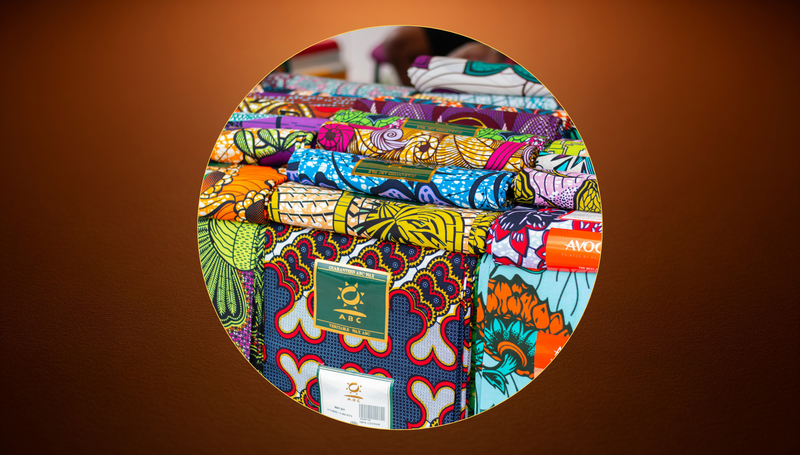
Kente, Mudcloth, Adinkra — African textiles don't just clothe the body, they speak. A short history of the patterns that have carried culture across centuries.


Asase Ye Duru means the earth has weight. Not only the weight of its mass, but the weight of what it sustains — every life, every lineage, every act of the divine. The Akan proverb makes a remarkable claim: without the earth, even the supreme being cannot act. The ground beneath you is not backdrop. It is foundation.

There are things that fire cannot consume. The traditional Akan priests who walked barefoot across hot coals and emerged unburned were not performing a miracle. They were demonstrating a truth about what certain qualities of character and faith produce in a person: something the fire cannot finish. Hye Won Hye — that which does not burn. Not a promise that the fire will not come. A statement about what you have become in relation to it. I have been through this. I am still here. The fire did not win.

The Akan call them mpanyinsem—the words of the elders. These proverbs have travelled through generations, waiting patiently for ordinary moments to reveal just how much life they contain.

He who does not know, if he learns, comes to know. The Akan proverb is almost self-evidently true — and yet its force lies precisely in what it implies: that ignorance is a position, not a permanent condition, and that the only barrier between not-knowing and knowing is the willingness to acknowledge the not-knowing and submit to the work of learning. Nea Onnim is the symbol of that willingness — and of the humility, perseverance, and service to others that make the work of learning not just possible but meaningful.