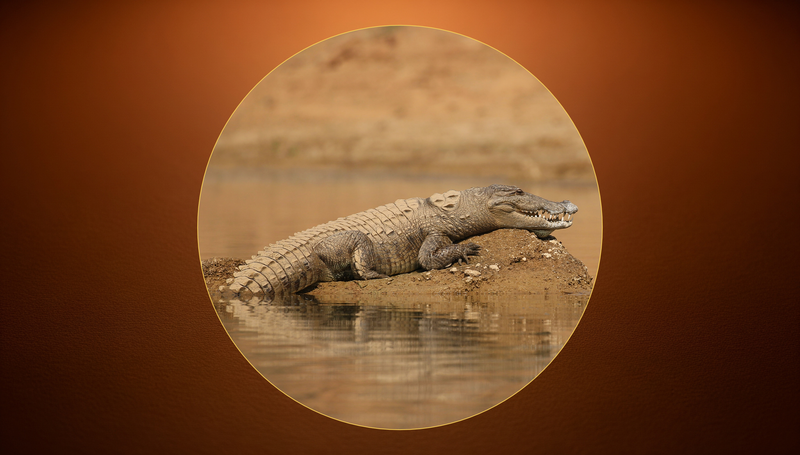
The crocodile lives in water yet it breathes air. Seven words in Twi that contain a complete philosophy of existence across difference. The Akan people of Ghana looked at the crocodile and saw not a monster but a model: the creature that masters two environments simultaneously, that belongs fully to both, that carries its essential nature with it wherever it goes. Denkyem is the symbol of that mastery — not adaptation as loss of self, but adaptation as its fullest expression.
Results for denkyem


Two crocodile heads. One stomach. Everything they swallow feeds both of them equally. They are still fighting. The Akan people of Ghana looked at this image and did not call it a failure. They called it the most honest picture of what human community actually is — shared destiny, and still competing — and they made it into a symbol. Not to celebrate the conflict. To ask the question it raises: if the stomach is already one, what exactly are the heads fighting about?

There is a version of strength that looks like not moving. But the crocodile breathes air and lives in water — fully itself in both worlds. The Akan called this Denkyem: the wisdom of remaining yourself while everything around you shifts.

There are things that fire cannot consume. The traditional Akan priests who walked barefoot across hot coals and emerged unburned were not performing a miracle. They were demonstrating a truth about what certain qualities of character and faith produce in a person: something the fire cannot finish. Hye Won Hye — that which does not burn. Not a promise that the fire will not come. A statement about what you have become in relation to it. I have been through this. I am still here. The fire did not win.

Two crocodiles. One stomach. The Akan symbol Funtumfunefu Denkyemfunefu is one of the most vivid images in the Adinkra canon — and one of its most quietly urgent lessons. It doesn't ask you to stop disagreeing. It asks you to remember what you're still sharing, even in the middle of the fight.

A chain is easy to misread: you see it and you see constraint. The Akan people of Ghana looked at the same object and saw something entirely different — a form in which every individual part remains completely itself, and yet contributes to something that no single part could be or accomplish alone. Nkonsonkonson: chain link. Neither link dissolves into the other. Each holds, and is held. We are linked, the Akan proverb says, in both life and death. The connection is not optional. The only question is what quality of link you choose to be.

After the dispute is over, a question remains that is harder than the dispute itself. What happens now? The Akan people of Ghana had an answer, and they gave it a form: a knot, interlocking, with no visible beginning and no visible end. Mpatapo — the pacification knot. Not the peace that precedes conflict, which is easy. The peace that is chosen after it, which costs something. Life, the Akan proverb says, needs reconciliation. The knot is not optional. The question is only whether you will tie it.

Adinkra symbols are one of Africa's most sophisticated visual languages. Here's what they mean, where they came from, and why they still matter today.