Your Cart

Your cart is empty

Checkout
Skip to content

Your Cart

Your cart is empty

Checkout
This week's reflection:AUTOPILOT.
Afrofa
  • The Ritual →
  • The Symbols
    Explore The Guide Gallery of all 100+ Symbols The Archive Full Meanings/History Library
  • The Journal
  • The Proverbs
  • Our Story
    The Brand Our Story Founder + Mission Our Impact Community + Culture Sustainability Materials + Ethics
Wear Philosophy →
0
Afrofa
The Ritual →
The Symbols
The Hub The Archive
The Journal → The Proverbs →
Our Story
Our Story Our Impact Sustainability
Shop
T-Shirts Hoodies Posters All Collections
Shop by Meaning
Love & Unity Strength & Courage Wisdom & Knowledge Wealth & Prosperity Spirituality Leadership Resilience & Growth Identity & Heritage
Log inCart (0)
Instagram Pinterest
Search

Results for akoma

20 results for akoma
JournalAll
From the Journal
Akoma — The Adinkra symbol of Patience & Tolerance
individuality-development
Akoma — The Adinkra symbol of Patience & Tolerance

In Twi, the language of the Akan people of Ghana, to tell someone to get a heart — nya akoma — is to tell them to be patient. To say someone has no heart — onni akoma — is to say they are impatient. The heart, in this tradition, is not the seat of feeling. It is the seat of endurance. Akoma, the heart symbol, carries a meaning deeper than love: the willingness to remain, to hold, to show up again and again for what you have committed to, on the days when it costs something.


Akoma Ntoso — The Adinkra Symbol of Understanding & Empathetic Connection
layer:relationship
Akoma Ntoso — The Adinkra Symbol of Understanding & Empathetic Connection
Two people in deep conversation — illustrating the Akan concept of Akoma, the Adinkra symbol of patience, tolerance, and the goodwill we extend before we respond
layer:character
ONE MORE BREATH.

The heart symbol appears across cultures — but the Akan meaning runs somewhere surprising. Akoma is not primarily about love. It is about patience: the discipline of feeling everything and choosing your response anyway.

Ani Bere A Enso Gya — The Adinkra Symbol of Patience and Self-Discipline
layer:character
Ani Bere A Enso Gya — The Adinkra Symbol of Patience and Self-Discipline

The Akan people of Ghana had an observation about eyes and fire that became one of their most precise moral teachings. The observation was this: that when a person's eyes are red — when they are inflamed with frustration, anger, or the kind of impatience that wants to act before it has thought — fire does not necessarily follow.

Nnamfo Pa Baanu — The Adinkra Symbol of True Friendship & the Bond Between Two
friendship-harmony
Nnamfo Pa Baanu — The Adinkra Symbol of True Friendship & the Bond Between Two
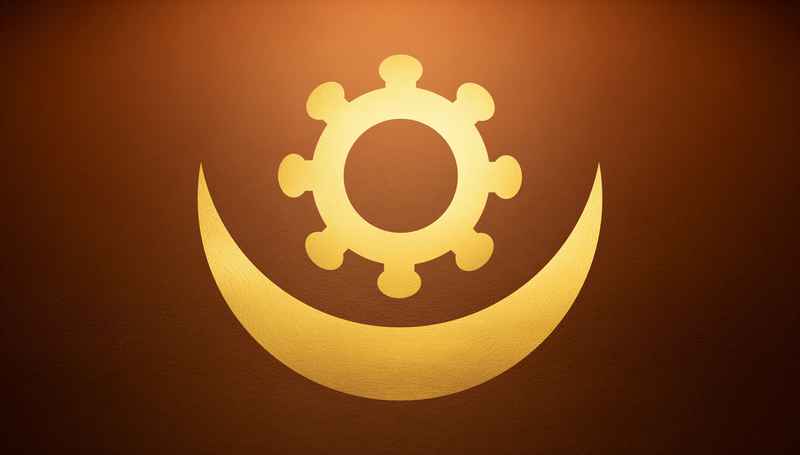
Osram ne Nsoromma — The Adinkra symbol of Love and Faithfulness
layer:relationship
Osram ne Nsoromma — The Adinkra symbol of Love & Faithfulness

Every night without exception, the North Star is there. She does not announce her return. She takes her place as the sky darkens and waits — steadily, without complaint, for the moon to come back. The Akan people of Ghana saw this and called it love. Not the feeling, not the declaration. The faithfulness. Kyekye pe awaree: the North Star loves marriage. She is always there. Osram ne Nsoromma — the moon and the star — is the symbol of the love that has become a nature rather than an effort.

Kete Pa — The Adinkra Symbol of Good Marriage
layer:foundation
Kete Pa — The Adinkra Symbol of Good Marriage
Eban — The Adinkra symbol of Love, Safety and Protection
layer:relationship
Eban — The Adinkra symbol of Love, Safety & Protection

Love, in most accounts, is a feeling. The Akan people of Ghana agreed — but they observed that what love does, at its most essential, is build a fence. It draws a line around what it values and creates a space inside which what it loves can be safe. Eban: the fence. A home with a fence is an ideal home. Not because the fence is beautiful, but because what the fence does is essential — it makes the claim, structural and visible: what is inside here matters, and I have put a boundary around it.

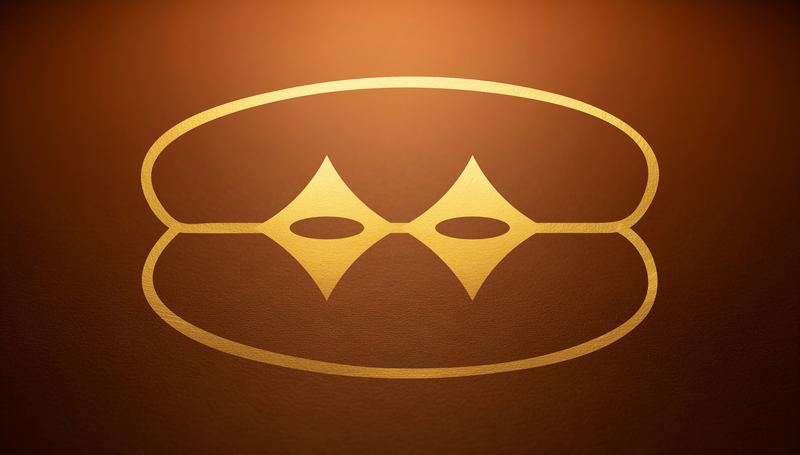
Mako — The Adinkra Symbol of Individuality & the Unevenness of Experience
individuality-development
Mako — The Adinkra Symbol of Individuality & the Unevenness of Experience
Odo Nnyew Fie Kwan — The Adinkra Symbol of Love & Devotion
fidelity-devotion
Odo Nnyew Fie Kwan — The Adinkra Symbol of Love & Devotion
Akoko Nan — The Adinkra Symbol of Parental Love, Nurturing & Discipline
layer:protection
Akoko Nan — The Adinkra Symbol of Parental Love, Nurturing & Discipline
Ese Ne Tekrema — The Adinkra Symbol of Friendship & Interdependence
friendship-independence
Ese Ne Tekrema — The Adinkra Symbol of Friendship & Interdependence
Boa Me Na Me Mmoa Wo — The Adinkra Symbol of Mutual Aid & Cooperation
community-mutual-aid
Boa Me Na Me Mmoa Wo — The Adinkra Symbol of Mutual Aid & Cooperation
Me Ware Wo — The Adinkra Symbol of Commitment & Marriage
commitment-courage
Me Ware Wo — The Adinkra Symbol of Commitment & Marriage
Adwo — The Adinkra Symbol of Peace and Serenity
layer:character
Adwo — The Adinkra Symbol of Peace, Calmness & Serenity

Every culture has its own understanding of peace. Some treat it as the absence of conflict — a negative state defined by what it lacks. The Akan people of Ghana gave peace a different definition, and a different image. Adwo names a condition that is not simply the end of disturbance but the presence of something worth having.

Owo Foro Adobe — The Adinkra Symbol of Persistence
layer:character
Owo Foro Adobe — The Adinkra Symbol of Persistence

Owo Foro Adobe names something that should not be possible: a snake ascending the smooth trunk of a raffia palm. It should not be able to. But it does — through persistence, prudence, and diligence working together. The symbol does not celebrate achievement in general. It celebrates the kind that only becomes possible when a difficult thing is faced without flinching.

Hye Won Hye — The Adinkra symbol of Imperishability and Endurance
layer:continuance
Hye Won Hye — The Adinkra symbol of Imperishability & Endurance

There are things that fire cannot consume. The traditional Akan priests who walked barefoot across hot coals and emerged unburned were not performing a miracle. They were demonstrating a truth about what certain qualities of character and faith produce in a person: something the fire cannot finish. Hye Won Hye — that which does not burn. Not a promise that the fire will not come. A statement about what you have become in relation to it. I have been through this. I am still here. The fire did not win.

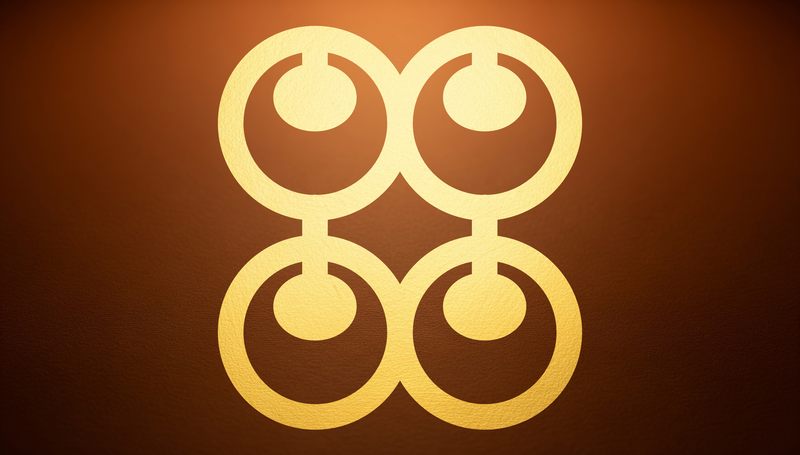
Mpuannum — The Adinkra Symbol of Femininity and Adornment
feminity-self-care
Mpuannum — The Adinkra Symbol of Femininity and Adornment
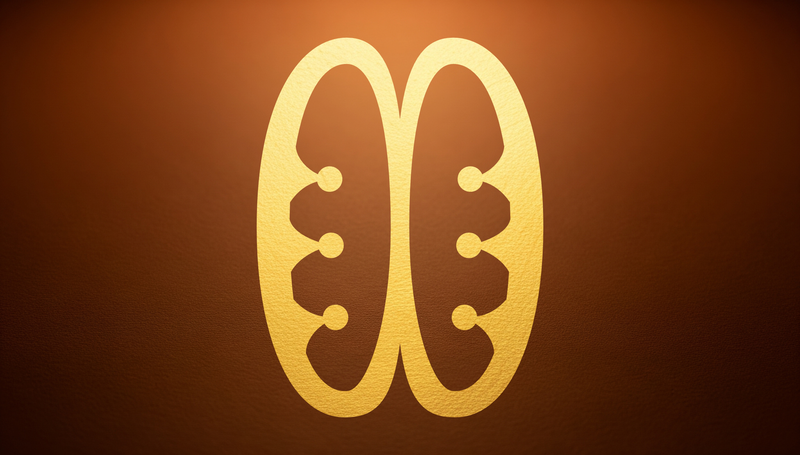
Woforo Dua Pa A — The Adinkra Symbol of Support, Cooperation & Good Alliance
layer:foundation
Woforo Dua Pa A — The Adinkra Symbol of Support, Cooperation & Good Alliance
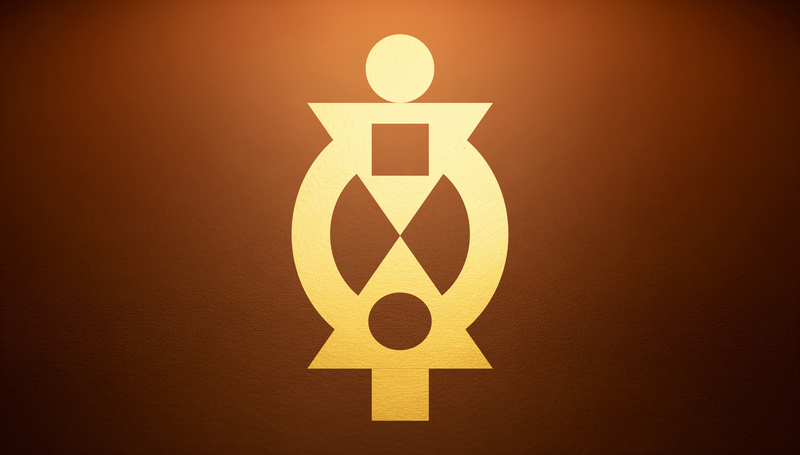
Mmeramubere — The Adinkra Symbol of the Female Cross, Warmth, & vitality
layer:character
Mmeramubere — The Adinkra Symbol of the Female Cross, Warmth, & Vitality
Afrofa

Ancient wisdom. Modern life. Symbols, stories, and objects designed to be lived with.

Rooted in meaning

Designed with cultural respect, printed on demand, and created for thoughtful everyday wear.

We accept
American Express Apple Pay Bancontact BLIK Google Pay iDEAL Wero Klarna Maestro Mastercard MobilePay PayPal Union Pay Visa
Shop
  • T-Shirts
  • Hoodies
  • Posters
  • All Collections
Help
  • Contact Us
  • FAQ
  • Fit Guide
  • Shipping & Delivery
  • Returns & Exchanges
  • Contract Withdrawal Policy
  • Withdraw from Contract
About
  • Our Story
  • Sustainability
  • Our Impact
© 2026 Afrofa. All rights reserved.
Privacy Policy Terms & Conditions Refund Policy Shipping Policy
Poland · PLN zł

When the music changes, so does the dance.

Akan proverb
  • Choosing a selection results in a full page refresh.
  • Opens in a new window.

Colour:
Size: Fit guide

This combination is unavailable

View full product details

Size Guide

Bella+Canvas 3001ECO · Unisex fit · Measurements are garment dimensions

Size Chest Length Sleeve
XS 86–91 cm 66 cm 19 cm
S 91–97 cm 69 cm 20 cm
M 97–102 cm 72 cm 21 cm
L 107–112 cm 74 cm 22 cm
XL 117–122 cm 76 cm 22.5 cm
2XL 127–132 cm 79 cm 23 cm
3XL 137–142 cm 81 cm 24 cm

How to measure

1
Chest

Measure around the fullest part of your chest, keeping the tape horizontal.

2
Length

Measure from the highest point of the shoulder down to the hem.

3
Sleeve

Measure from the shoulder seam to the end of the sleeve cuff.

Cotton Heritage M2580 · Unisex fit · Measurements are garment dimensions

⚠ This hoodie runs small — we recommend sizing up one.
Size Chest Length Sleeve
S 97 cm 66 cm 84 cm
M 102 cm 69 cm 86 cm
L 107 cm 71 cm 89 cm
XL 112 cm 74 cm 91 cm
2XL 122 cm 76 cm 94 cm
3XL 132 cm 79 cm 97 cm

How to measure

1
Chest

Measure around the fullest part of your chest, keeping the tape horizontal.

2
Length

Measure from the highest point of the shoulder down to the hem.

3
Sleeve

Measure from the centre back neck, over the shoulder and down to the cuff.

Answer two questions and we'll suggest your size.

We suggest
View full fit guide
Your collection
View your collection

Log in or create an account to keep your collection across all your devices.