

Hold a seed in your palm.
Not the illustrated version from childhood, already halfway to becoming a tree. An actual seed. Small. Dry. Almost dismissible. Something you could lose in the seam of a pocket or sweep from a table without noticing. It does not look like a future. It looks like refusal.
Press it between your fingers and you meet its first language: resistance. It will not open because you are curious. It will not soften because you are impatient. It keeps its life hidden with a severity that can feel almost unfriendly. From the outside, a seed appears to be all hardness. The softness is none of your business yet.
Every seed is a future protected by refusal.
We misunderstand hardness because we usually meet it after it has become defensive. A hard voice. A hard face. A hard person. We learn to think of hardness as the opposite of tenderness, as though anything that resists must have lost its capacity to feel.
But there is another kind of hardness. Older. Quieter. Less performative. The hardness that exists because something living needed protection.
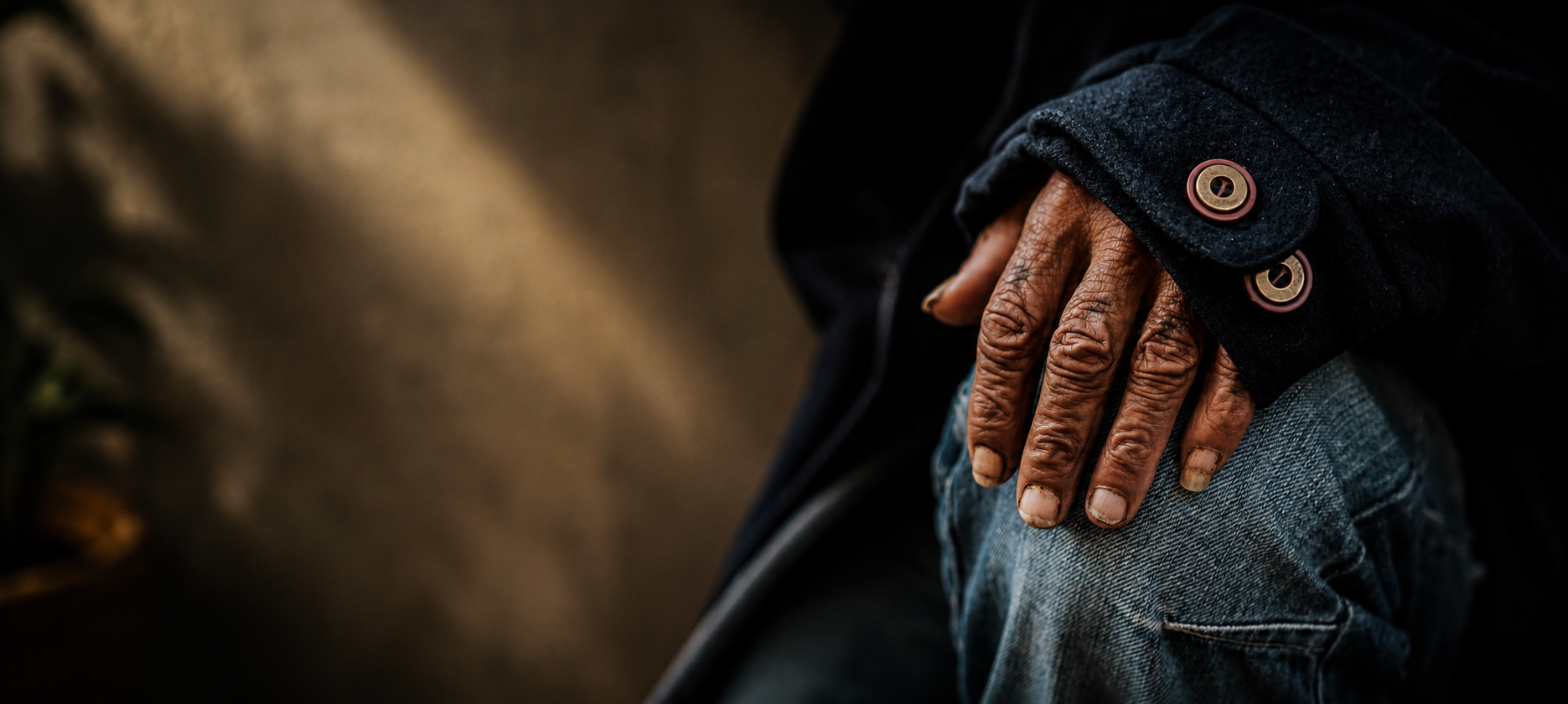
You can see it in ordinary things. The skin that forms over a healing wound. The shell around an egg. The bark around a tree. The callus in the palm of a hand that has done the same work for years. The body is not being cruel when it thickens. It is remembering where pressure has been.
A life does this too. There are seasons that press on you until some outer layer changes. You do not decide it in a dramatic way. You simply notice, later, that what once entered easily now has to knock. A disappointment still hurts, but it no longer names you.
Pressure does not only break things. Sometimes it proves what was hidden inside them.
The Akan people of Ghana found one of their images for this in the seed of the wawa tree. The symbol is called Wawa Aba: the seed of the wawa. The tree is associated with durable timber, with material that withstands insects, weather and time. But the symbol does not choose the finished tree. It chooses the seed.
That choice matters.
A tree is the part everyone can admire. Height. Shade. Usefulness. Presence. A tree has already survived enough to become visible. A seed has not yet been granted that kind of evidence. It is still compact. Still silent. Still carrying a life no one can prove by looking at it. If you did not know what it was, you might mistake it for a hard little nothing.
Wawa Aba recognises the stage before proof. It honours perseverance not as spectacle, but as density. The kind of endurance that does not look impressive while it is happening. There is no applause inside a seed. No witness. Only the quiet insistence of something that will not open before its time, and the deeper, less visible trust that its time will come.
This is where the symbol becomes more demanding than a simple celebration of resilience. It does not say that hardship is good. It does not make pain noble. It does not decorate suffering with meaning before the sufferer is ready. Instead, it notices a fact: some things survive pressure because there is something inside them worth guarding.
The seed is hard because the life inside it is delicate.
There are pressures that leave no visible mark.
The pressure of becoming the dependable one. The pressure of waiting. The pressure of continuing. They rarely look heroic from the outside. Yet they alter the shape of a life all the same.
But perhaps not all hardness is damage. Perhaps some of it is evidence that something inside you chose to remain alive.
The danger is that we begin to worship the shell. We start to believe the hardened part is the whole of us. We become proud of needing nothing, of being unreachable, of never asking, never bending, never showing where the ache still lives. This is not Wawa Aba at its deepest. A seed that never opens has only mastered survival. It has not yet become what survival was meant to protect. Survival was always only the guard standing at the door of something else.
There is a difference between being uncrushed and being closed forever.
Wawa Aba does not ask you to become stone. It asks you to understand what your hardness has been guarding. The tenderness that still hopes, though more carefully now. The trust that has not died, only learned to watch the door. The imagination that still returns in small flashes. The capacity to love after loss, speak after silence, begin again after the last beginning exhausted you.
There are moments you rarely speak of anymore, though they are still present in the grain of you. The phone call that rearranged the future. The empty chair. The month you checked your account before buying anything ordinary.
For a while, those moments may have felt like the whole story. You lived inside their pressure. You woke with it. Ate with it. Carried it into conversations where you still had to answer politely.
Then, slowly, not neatly, something changed. The pressure did not necessarily disappear. You became differently arranged around it. What once filled the whole room became one wall of the room. Still there. Still real. But no longer the only architecture.
People may only notice the later version of you. The calm answer. The resumed work. The ability to listen to someone else's crisis without making it about your own. They may say you are strong. They may mean it kindly. But they may not know how much of that strength is not confidence, not optimism, not even courage in the way courage is usually imagined.
It is density. The accumulated matter of what you have carried and not allowed to crush the living centre of you.
You cannot always see what someone has survived. You can only see that something in them remained.
Under pressure, many things reveal their true weight. Some ambitions that once seemed essential become surprisingly light. Some relationships show whether they were companionship or decoration. Some beliefs discover whether they were inheritance, habit or something you can actually stand on. What do you still honour when there is no ease in honouring it? What remains kind in you when kindness is no longer convenient? What promise do you keep when no one would blame you for putting it down?
A seed under soil is not escaping pressure. Soil presses from every side. Darkness presses. Moisture presses. Time presses. Yet the seed is not merely surviving burial. It is being held in the very condition that will one day make opening possible.
This is delicate ground, because not every pressure should be romanticised. Some weights should be removed. Some rooms should be left. Some burdens are unjust, and no symbol should be used to ask a person to endure what is destroying them. The seed is hard, yes, but it also requires the right conditions. Hardness alone is not growth.
Perhaps the real question is not how long you have endured, but what your endurance has kept alive. If what you are protecting is life, truth, dignity, love, a future self still forming in the dark, then your hardness has purpose. If what you are protecting is pride, numbness or the belief that needing help is weakness, then the shell may have become a prison.
Even seeds must eventually risk opening. The point was never to become unbreakable. The point was to keep the future alive long enough for it to grow.
You will make breakfast after a year you thought would empty you. You will laugh and be surprised that the sound still belongs to you. You will answer a message without rehearsing your worth. You will walk past a place that used to undo you and feel, not nothing, but enough room around the feeling to keep walking.
Do not despise the smallness of what survived.
The Akan placed a philosophy inside a seed because they understood that scale is not the same as power. The seed of the wawa tree does not need to explain itself. It does not argue with the hand that tries to crush it. It does not perform resilience. It simply keeps what it carries from being taken too soon.
Hold the seed again.
Feel its refusal.
Remember that the hardness was never the whole story.
It was simply the shape tenderness took while it was still becoming possible.
Sit With This
