

There is a version of tending to yourself that you would never think to photograph.
It happens without candles. Without a mirror nearby. Without the pleasing arrangement of objects that tells the world you are taking yourself seriously.
It is the glass of water you drink standing in the kitchen because you suddenly realise you have been running on nervousness all day.
The clean shirt you choose not because anyone will notice, but because your body has been asking for gentleness.
The hour you spend doing nothing in particular and return from feeling, quietly, more like yourself.
Most of us have become fluent in the image of care while growing uncertain about the feeling of it.
We know what restoration is supposed to look like now.
There is a vocabulary for it. A colour palette. A shelf. A routine. A tone of voice. There are oils and journals, linen sets and ceramic cups, careful breakfasts and slow mornings arranged as evidence that a person has mastered the art of returning to themselves.
None of these things are wrong.
A beautiful object can hold a life together for a moment. A routine can become a small mercy. There are days when a clean room, a good meal, a walk taken slowly, or a face washed with attention feels less like decoration than rescue.
The problem begins when the appearance of tending starts to replace the experience of being tended.
When the morning routine becomes another performance to complete. When rest becomes something to optimise. When the quietest parts of life are reorganised around how convincingly they can be seen from the outside.
You can make your life look soft and still be hard on yourself inside it.
The performance of care does not merely fail to restore us. It can teach us to mistake visibility for nourishment.
This is the strange bargain many of us have accepted. We are encouraged to become more attentive to ourselves, but often only in forms that can be witnessed. The private act becomes public proof. The interior need becomes a lifestyle marker. The exhausted person learns to present renewal before they have actually received it.
And because the performance is so polished, it can take a long time to notice what has gone missing.
You might notice it at the end of a day that looked balanced from the outside but left you feeling strangely untouched. You did the things. You took the walk. You prepared the meal. You answered kindly. You kept the appointments. You even rested, in the scheduled way rest now often happens.
Still, something in you remained unvisited.
This is not because modern people do not care for themselves. Often we are trying very hard. Perhaps too hard. The difficulty is that care cannot be forced to appear by resembling itself. A thing can have the shape of care and still miss its substance.
A bath can be avoidance. A routine can be punishment. A beautiful meal can be another way of measuring yourself. Even rest can become a taskmaster when it is undertaken for the person you are trying to become rather than the person who is already tired.
The old question was, am I caring for myself?
The more honest question may be, am I present enough to receive the care I am performing?
Centuries ago, the Akan held onto a much quieter image for this kind of attention.
Not a grand object. Not a sacred monument. Not a dramatic emblem of triumph.
A wooden comb.
They called it Duafe.
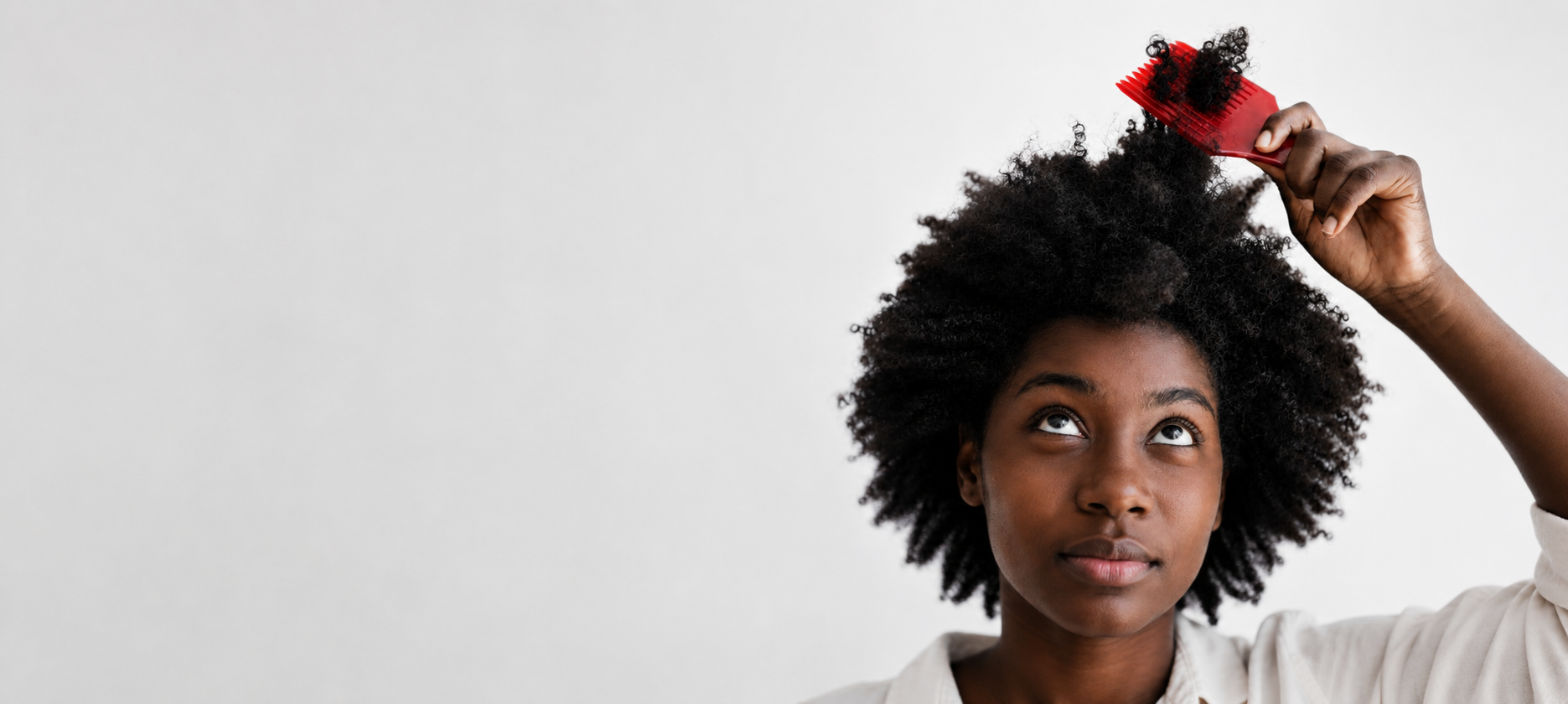
At its most literal, Duafe is small enough to hold in the hand. A working object. A thing used daily by Akan women to tend hair, to untangle, to part, to smooth, to prepare. Its power does not come from spectacle. It comes from repetition. From nearness. From the patience required to care for something that cannot be rushed without damage.
That is what makes the choice so exact.
The Akan did not turn the comb into a symbol because hair needed decoration. They turned it into a symbol because daily care contains a philosophy most cultures underestimate until they lose it.
To comb hair properly is to pay attention to what is actually there. Not the hair you wish were there. Not the hair an audience might prefer. The hair in your hands. Its texture. Its resistance. Its knots. Its tenderness. Its history. You cannot tend it abstractly. You have to meet it as it is.
Care begins where performance ends: in the honest attention to what is actually there.
This is why Duafe still feels so alive. It interrupts the modern obsession with care as a finished image and returns us to care as a manner of touching the world.
A comb does not ask to be admired. It asks to be used well.
There is something almost radical in that now. A tool whose meaning depends not on how it appears, but on the quality of the attention passing through it. A reminder that the most important forms of care often happen off-camera, without announcement, without even the satisfaction of being recognised as care at the time.
Someone oils a scalp slowly because the child in front of them is tender-headed. Someone sits at the edge of a bed and listens without reaching for a solution. Someone cooks enough for a person who says they are not hungry but eats when the plate arrives. Someone folds a shirt the right way because they know how the fabric sits against the skin.
This is care without a caption.
It is not always soft. Sometimes it is practical, even stern. Drink water. Sit down. Take the coat. Let me look at that. Sleep now. Call when you get there. The language of care has never needed to sound poetic in order to be profound.
Much of what saves us arrives like this: ordinary, repeated, almost invisible.
There is another reason the comb matters.
It was not only an object used alone. It passed between hands. Between mothers and daughters. Grandmothers and granddaughters. Sisters, aunties, cousins, friends. It belonged to the long human tradition of learning by sitting close enough to watch.
Before care becomes language, it is atmosphere.
A child learns what patience feels like in the pace of the hands moving through their hair. Learns whether their body is a problem to be corrected or a place worthy of tenderness. Learns, without anyone saying it, that beauty is not the same as being made acceptable to strangers.
This is knowledge of a serious kind. But because it travels through domestic rooms, through women’s hands, through small gestures repeated over years, it has often been mistaken for something minor.
It is not minor.
The person who knows how to tend knows how to notice when something is becoming brittle. A relationship. A room. A child. A body. A silence. The person who knows how to tend understands that neglect rarely announces itself loudly at first. It gathers at the edges. In the unanswered message. The meal skipped too many times. The small resentment left uncombed until it becomes a knot.
Duafe honours that intelligence.
Not because women were expected to carry care as a burden, but because the ability to tend was recognised as a form of wisdom. A difficult one. A durable one. The kind that keeps a life from fraying in ways nobody notices until the fabric gives way.
Beauty, in this older sense, was not appearance. It was evidence that something had been cared for.
That distinction matters now because the modern world has made beauty unusually anxious. It asks to be maintained, displayed, improved, compared. It turns the body into a project and then calls the project empowerment. It sells confidence as an aesthetic and tenderness as an upgrade.
Duafe points in another direction.
It does not ask whether you look cared for.
It asks whether care has reached you.
That is a more difficult question. It cannot be answered by the surface alone. It asks about the parts of you that no one applauds. The inner room. The tired place. The private discouragement. The body you inhabit when nobody is asking it to perform being beautiful, productive, healed, impressive, desirable, calm.
Have you been visited there?
Have you been patient with what knots easily?
Have you allowed yourself to be known without arranging the scene first?
The temptation is to turn even this into a new assignment.
To become better at real care. To perform not performing. To turn sincerity into another identity one can fail at. That is the cleverness of our age: it can convert almost anything into an aesthetic, including resistance to aesthetics.
But the comb is smaller than that. More modest. More merciful.
It returns us to a hand moving slowly through hair. To the ordinary patience of beginning at the ends. To the knowledge that some tangles loosen only when they are not attacked. To the fact that tenderness often has a method, and that the method cannot be rushed simply because we are embarrassed by how long healing takes.
There will still be mornings arranged beautifully. There will still be routines, photographs, rituals, the small pleasures of making life look as gentle as we want it to feel. Perhaps there is no need to despise any of it.
Only to remember that the image is not the nourishment.
The hashtag is not the hour.
The object is not the attention.
Somewhere, someone is combing their hair before the day begins. No audience. No announcement. No transformation to sell. Just a body being met with patience. A hand remembering what hurry forgets. A small wooden philosophy moving carefully through what has become tangled.
It is not dramatic.
That may be how you know it is real.
SIT WITH THIS
Who taught you how to care for yourself?
A grandmother.
A mother.
A woman who showed you without calling it a lesson.
Some forms of care are inherited quietly. Sometimes we only recognise them years later, when our own hands begin to move in the same way.
