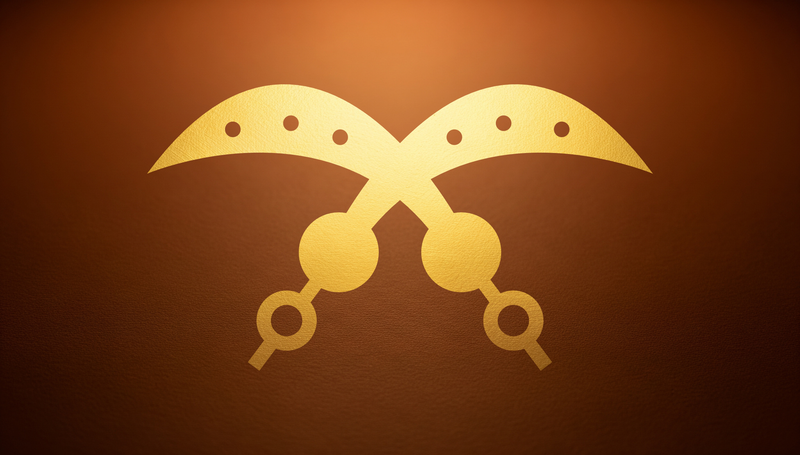
A sword does not swing by itself. The Akan proverb at the heart of Akofena is not about the blade. It is about the arm — and behind the arm, the person — and behind the person, the soul that makes the wielding honourable rather than merely powerful. Two crossed swords: balanced, deliberate, the image of force accountable to the character of the one who holds it. Courage, in Akan philosophy, was never just fearlessness. It was the willingness to act rightly, from the deepest part of who you were.

Results for akofena


The moments that demand courage rarely look heroic. They arrive quietly—in conversations we postpone, truths we soften and decisions we delay. Akofena reveals why courage is less about fearlessness than learning to carry responsibility well.


A wisdom knot is untied only by the wise. The Akan proverb is precise about this: not the clever, not the experienced, not the educated — the wise. And wisdom, as the Akan tradition understood it, is the specific capacity to take what you know and apply it well in the particular situation in front of you. Four qualities make it possible: knowledge, ingenuity, intelligence, and patience. The knot yields to all four working together. Pull with only one and it tightens.


The seed of the wawa tree is one of the hardest in the West African forest. That hardness is not incidental — it is produced by the conditions that the seed must survive before it can germinate and grow. The Akan people of Ghana looked at this and drew a conclusion: the difficulty does not prevent the growth. It creates the conditions in which the growth, when it comes, is strong enough to matter. Wawa Aba is the symbol of that process — hardness as preparation, not damage; adversity as the thing that makes you what you needed to become.