

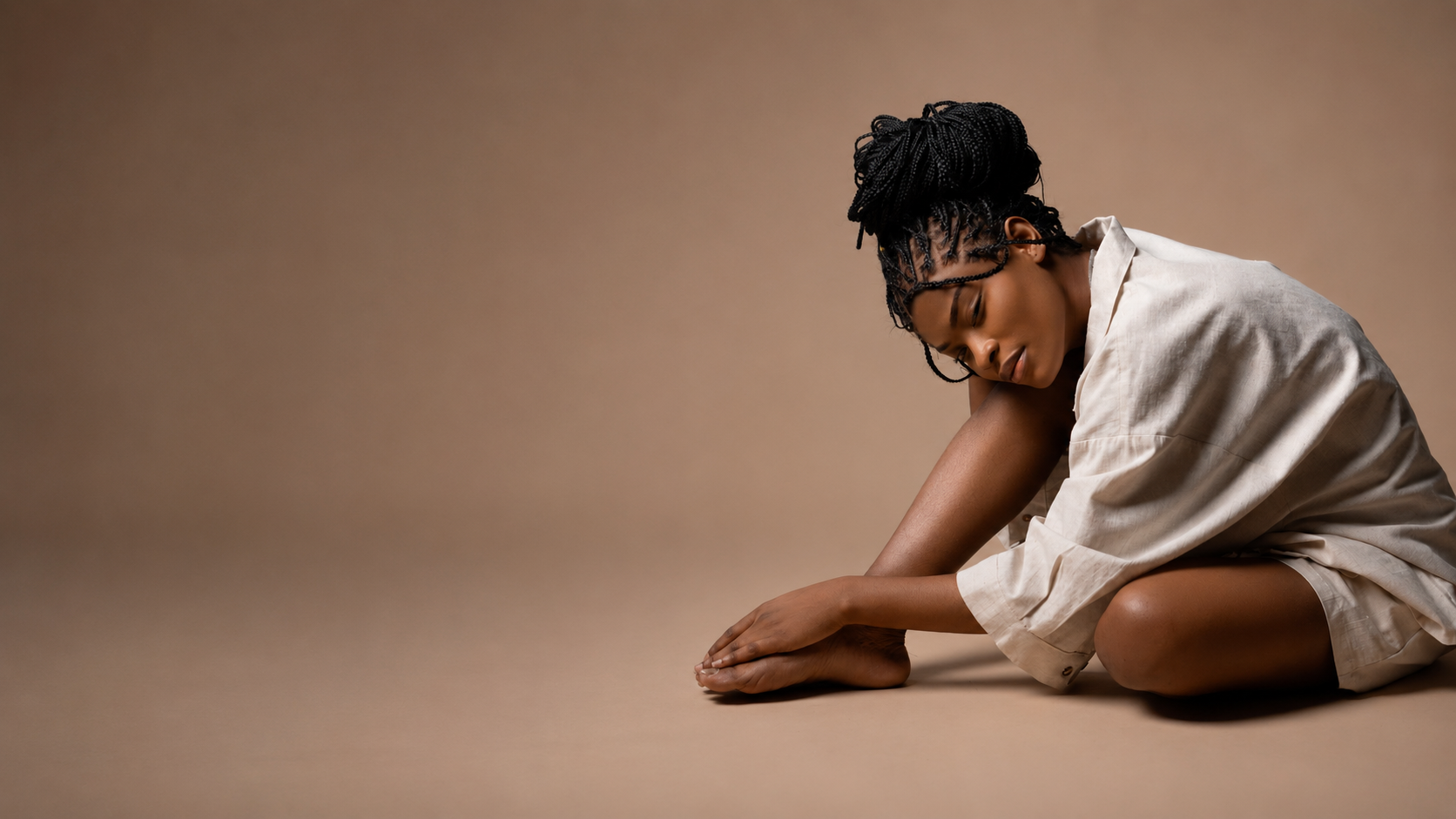
There is a kind of beauty that is always slightly tense.
You can feel it before you can name it. The room is being read. The body is being adjusted. Every gesture has been softened, sharpened, or arranged in quiet anticipation of being seen.
Everything is technically correct.
And still, something is missing.
Not because the clothes are wrong. Not because the beauty is false. Because underneath it, there is a question still waiting for permission.
Is this allowed?
Is this too much?
Is this what they want from me?
Some people do not get dressed. They negotiate.
They negotiate with the room before they enter it. With mirrors, with memory, with old comments that never quite left the body. With the invisible committee of everyone who has ever made them feel either too visible or not visible enough.
The result can look beautiful. It can even be admired.
But admiration is not the same as freedom.
There is a difference between dressing for the room and dressing from yourself. Anyone who has done both knows the difference in the body. One makes you monitor yourself. The other lets you arrive.
The first is full of calculation. You stand a little differently. Laugh a little differently. Choose the version of yourself that will cause the least disturbance. You become fluent in managing other people's comfort, even when no one has asked you to.
The second is quieter.
It does not always look dramatic. It may not announce itself at all. It might be a colour you finally wear because you love it. Hair left as it is. Jewellery chosen for memory rather than approval. A face that has stopped apologising for being expressive. A body no longer asking the room to explain whether it deserves to be there.
The thing being pointed at cannot be performed. It can only be inhabited.
Modern life still asks women to calculate.
How visible. How soft. How beautiful. How effortless. How confident before confidence becomes arrogance in someone else's mouth. How natural to appear while still appearing aware that someone is watching.
Even authenticity has become something to perform.
Be yourself, the culture says.
Then immediately begins grading the result.
There is also an older mistake, and it runs in the opposite direction: the idea that seriousness must look stripped down to be believed. As if a woman becomes more substantial by removing everything that gives her pleasure. As if beauty must be defended against intelligence. As if adornment and authority cannot occupy the same body.
The powerful and the beautiful were never opposites.
Someone taught us to separate them.
Beauty becomes exhausting when it is always trying to earn belonging.
The Akan printed this distinction into cloth.
The printed Adinkra symbol is called Mpuannum, named for a traditional five-tuft hairstyle worn by young Akan women at a particular moment in life. It was not a casual style. It was arranged with care, shaped with intention, and understood by the community that saw it.
The hairstyle communicated without needing to explain. It marked life stage, femininity, readiness, identity, and belonging. It made visible something that had already become true.
This matters because the symbol was not describing beauty as performance. It was describing beauty as inhabitation. A person not trying to become acceptable, but arriving in a form the community knew how to recognise.
Adornment, in this world, was not vanity. It was language. It was care made visible. It was the self presented with seriousness, not because the self needed decorating in order to matter, but because what matters deserves attention.
Adornment reveals the relationship a person has with themselves.
Sometimes adornment is armour.
Sometimes it is apology.
Sometimes it is camouflage.
And sometimes, at its most powerful, it is recognition.
You notice it in the woman who walks into a room without asking the room to define her. In the way she wears something because it belongs to her, not because it has been approved by the current mood of the world. In the absence of apology.
There is a steadiness in that. Not hardness. Not performance. A settled relationship with herself that remains present whether the room applauds or not.
And a room can feel it.
Not because she dominates it, but because she does not disappear inside it.
Mpuannum does not imagine an ideal woman. It imagines something more useful: a person no longer splitting herself into acceptable fragments. The part that can be taken seriously. The part that can be desired. The part that is allowed into the room. The part that must stay hidden because it makes other people uncertain what to do with her.
Instead, the whole self arrives.
Not loudly, necessarily.
Not perfectly.
But without abandoning herself at the door.
The people who know who they are do not need every room to agree with them.
This is not the absence of effort.
Often it is the result of great effort. Years of unlearning the room. Years of noticing where the body tightens. Years of learning the difference between being observed and being diminished by observation. Years of discovering that the gaze of others does not have to become the architect of the self.
There are moments when a person stops negotiating their own presence. They are rare enough to remember. And real enough to build a life toward.
The body not apologising for being a body.
The adornment not apologising for being beautiful.
The presence not apologising for taking up space.
Modern life asks, Will they approve?
The Akan asked something quieter.
Can you finally arrive as yourself?
There is a beauty that does not ask permission. It arrives because the person wearing it has finally stopped leaving herself behind.
Sit With This
What part of yourself have you been dressing down so the room can stay comfortable?
Some forms of beauty are not performances.
They are recognitions — the outward shape of a self no longer asking to be made acceptable.
Perhaps freedom begins in the moment you stop negotiating your own arrival.
