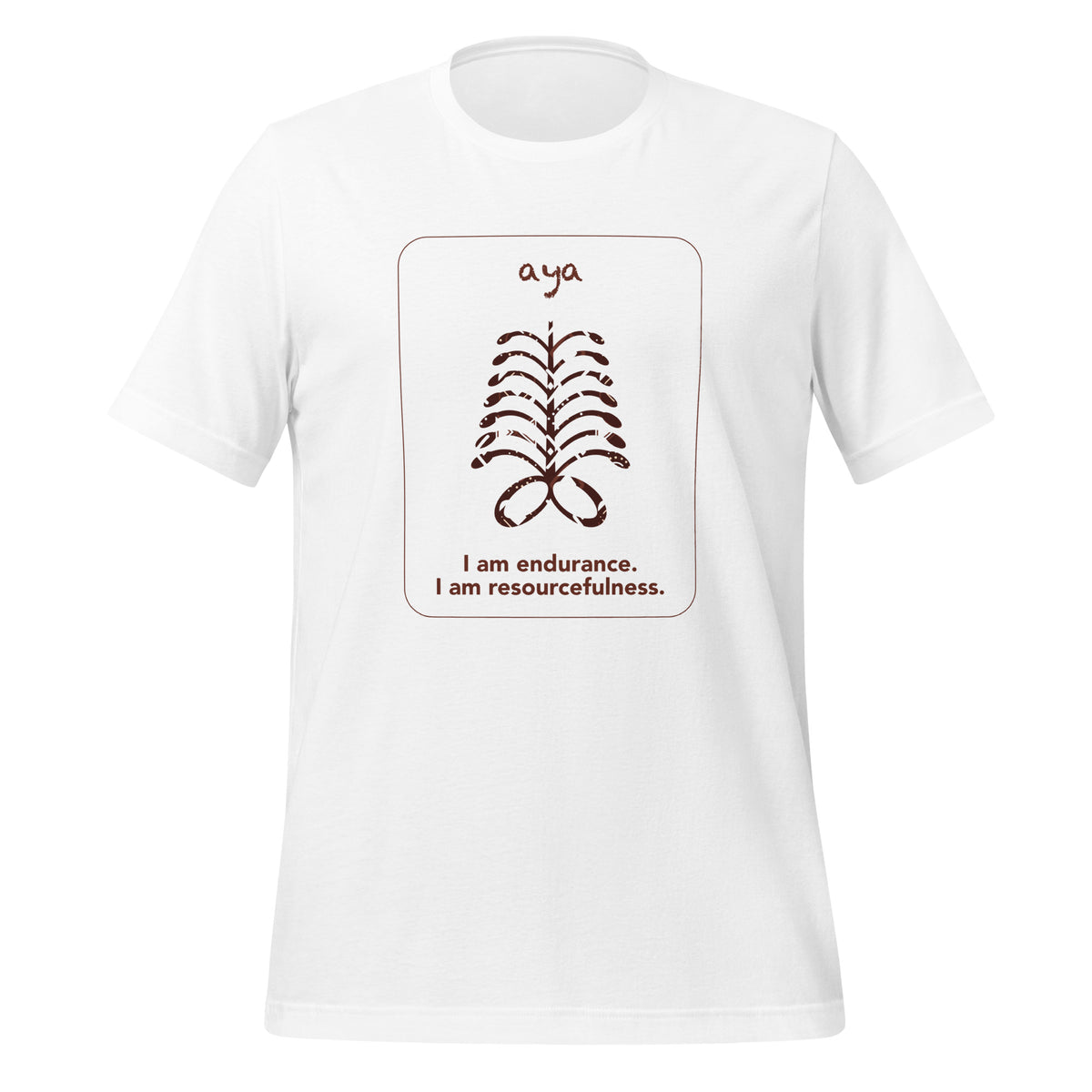
Aya is the Akan symbol of the fern — a plant that grows where almost nothing else will. Ferns take root in the cracks of rocks, in the shadow of dense forest, in soil that has been stripped of nutrients. The Akan observed this quiet persistence and made it a symbol of the person who survives where survival should not be possible. Its name means "fern," but its meaning is much larger than the plant it depicts.
The Akan teaching behind Aya is that endurance is not passive waiting — it is active, rooting, reaching. The fern does not wait for better conditions; it transforms the conditions it has. To embody Aya is to refuse to be defined by your circumstances, to find footing where others find none, and to grow not despite difficulty but directly through it. Resourcefulness, in this tradition, is a form of dignity.
Aya is worn by those who have made something out of nothing — by people who have rebuilt after loss, who have found a way when no way was given, who carry the particular pride of having endured. It is not a symbol of suffering, but of what suffering reveals about a person's capacity to persist. To wear it is to say: I am still here, and I am still growing.